Lion's Mane Mushroom: What It Is, What's In It and What the Research Shows
4 min read
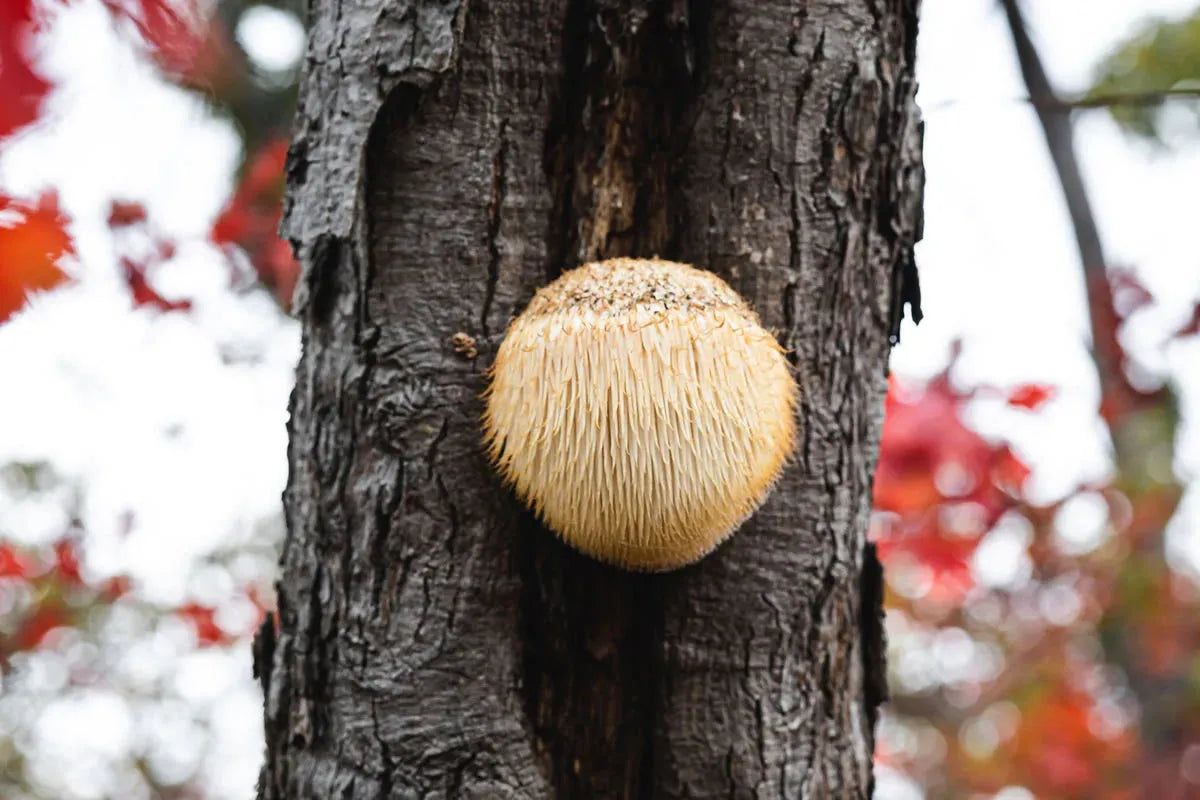
Lion's Mane is an edible mushroom, Hericium erinaceus, that grows as a white cascade of soft, icicle-like spines on hardwood trees. It has been eaten and used in traditional practice in China and Japan for centuries, and today it is one of the most popular mushrooms in UK supplements. Here is what it is, where it grows, what is actually in it, what the research does and doesn't show, and how to read a Lion's Mane label.
What is the Lion's Mane mushroom?
Lion's Mane is a fungus that grows on dead or dying broadleaf trees, especially beech and oak. Instead of a cap and gills, it forms a rounded clump of long, hanging spines, which is where it gets its names: Lion's Mane, bearded tooth fungus, pom pom mushroom and, in Japan, yamabushitake, after the Yamabushi mountain monks whose robes it is said to resemble.
The spines are where it makes its spores. (If you want to know how that compares to an ordinary cap-and-gills mushroom, see the parts of a mushroom.)
Can you find Lion's Mane in the UK?
Rarely. Wild Lion's Mane is scarce in Britain and is protected under the Wildlife and Countryside Act 1981, so it is illegal to pick it in the wild. The Lion's Mane you can buy, fresh, dried or in supplements, is cultivated.
What does it taste like?
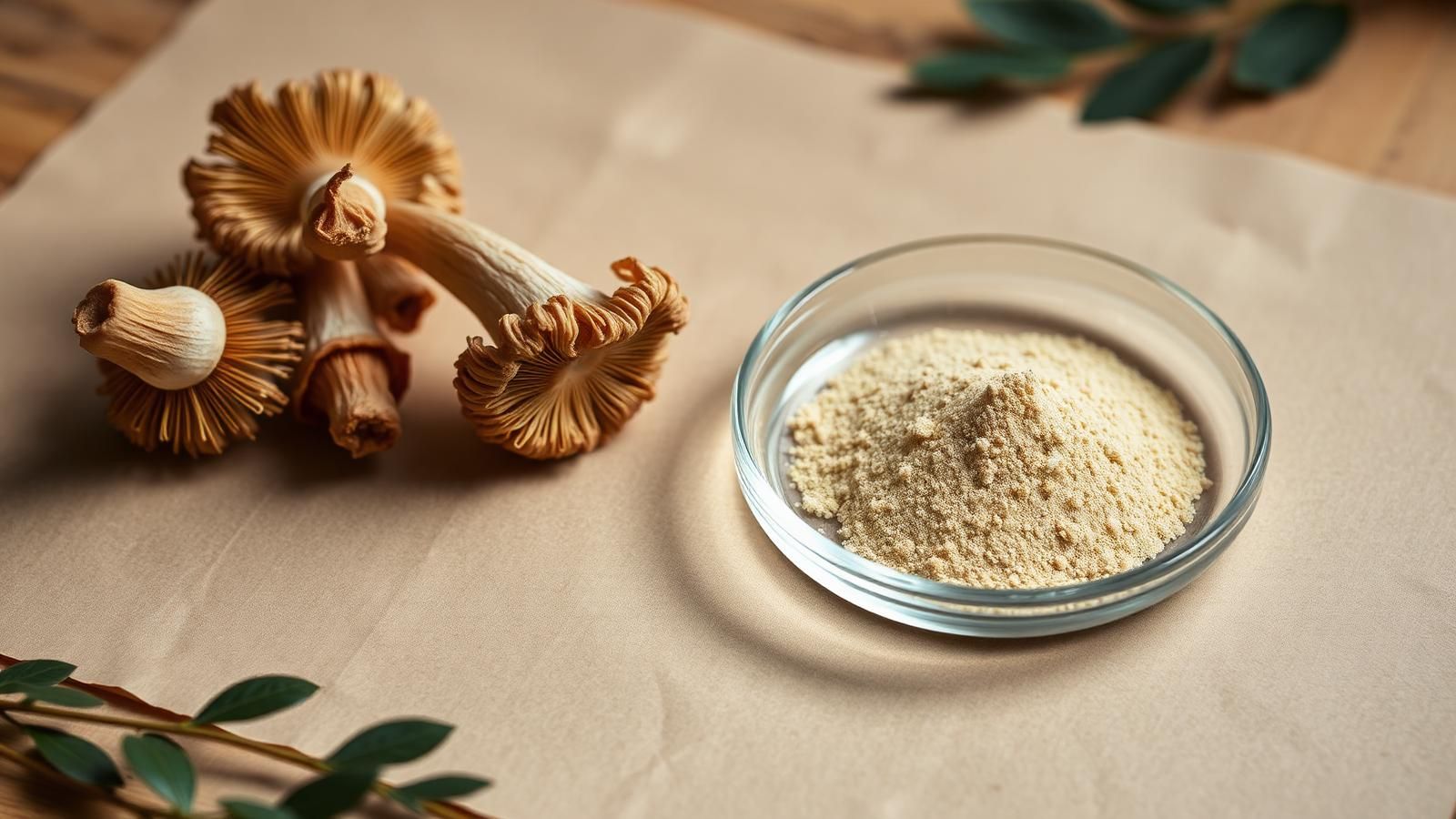
Fresh Lion's Mane is mild, slightly sweet and often compared to crab or lobster in texture. It is cooked like other culinary mushrooms: torn and pan-fried until golden. Dried and powdered, it tastes gently earthy and nutty, which is why it disappears easily into coffee, smoothies and soup.
What is in Lion's Mane?
Beta-glucans – polysaccharides found in the cell walls of fungi. Supplement labels often state a beta-glucan percentage, and it is one of the more useful numbers to compare.
Hericenones – compounds found mainly in the fruiting body (the visible mushroom).
Erinacines – compounds found mainly in the mycelium (the root-like network), not the fruiting body.
Like other mushrooms, it also contains protein, fibre and small amounts of vitamins and minerals.
Most of the interest in Lion's Mane comes from hericenones and erinacines. Most of the research on them so far has been done in the lab and in animals.
Lion's Mane benefits: what the research does and doesn't show
This is where a lot of marketing gets ahead of the evidence, so plainly:
Lab and animal studies on Lion's Mane compounds are interesting, and they are why researchers keep studying it.
Human trials are few, small and short, and they usually test a single ingredient rather than a finished product.
In the UK, Lion's Mane has no authorised health claim. No brand, including us, can legally promise that Lion's Mane improves memory, focus or mood.
The fair way to see it is as a food with a long history of traditional use and an evidence base that is still developing. If you want a product with an approved focus-related claim, look for added vitamins: Vitamin B12 contributes to normal psychological function, and Vitamin B5 contributes to normal mental performance. For a longer look at the studies, read Lion's Mane, does it work?
Fruiting body or mycelium?
Supplements are made from one or both. Fruiting body products use the mushroom itself. Mycelium products are often grown on grain, which can end up in the finished powder and dilute it. Neither is automatically "better", but a good label tells you which you are getting. We explain the difference in Lion's Mane without mycelium?
How to read a Lion's Mane supplement label
Part used: fruiting body, mycelium or both.
Extract or powder: an extract ratio such as 10:1 tells you how concentrated it is; a "dry herb equivalent" is not the physical weight in the capsule.
Milligrams per daily serving, not per tub.
Beta-glucan percentage, ideally backed by a batch certificate.
Claims: health claims should be tied to vitamins or minerals, not to the mushroom.
We put several UK products through these checks in the best Lion's Mane mushroom supplements in the UK.
How do people take Lion's Mane?
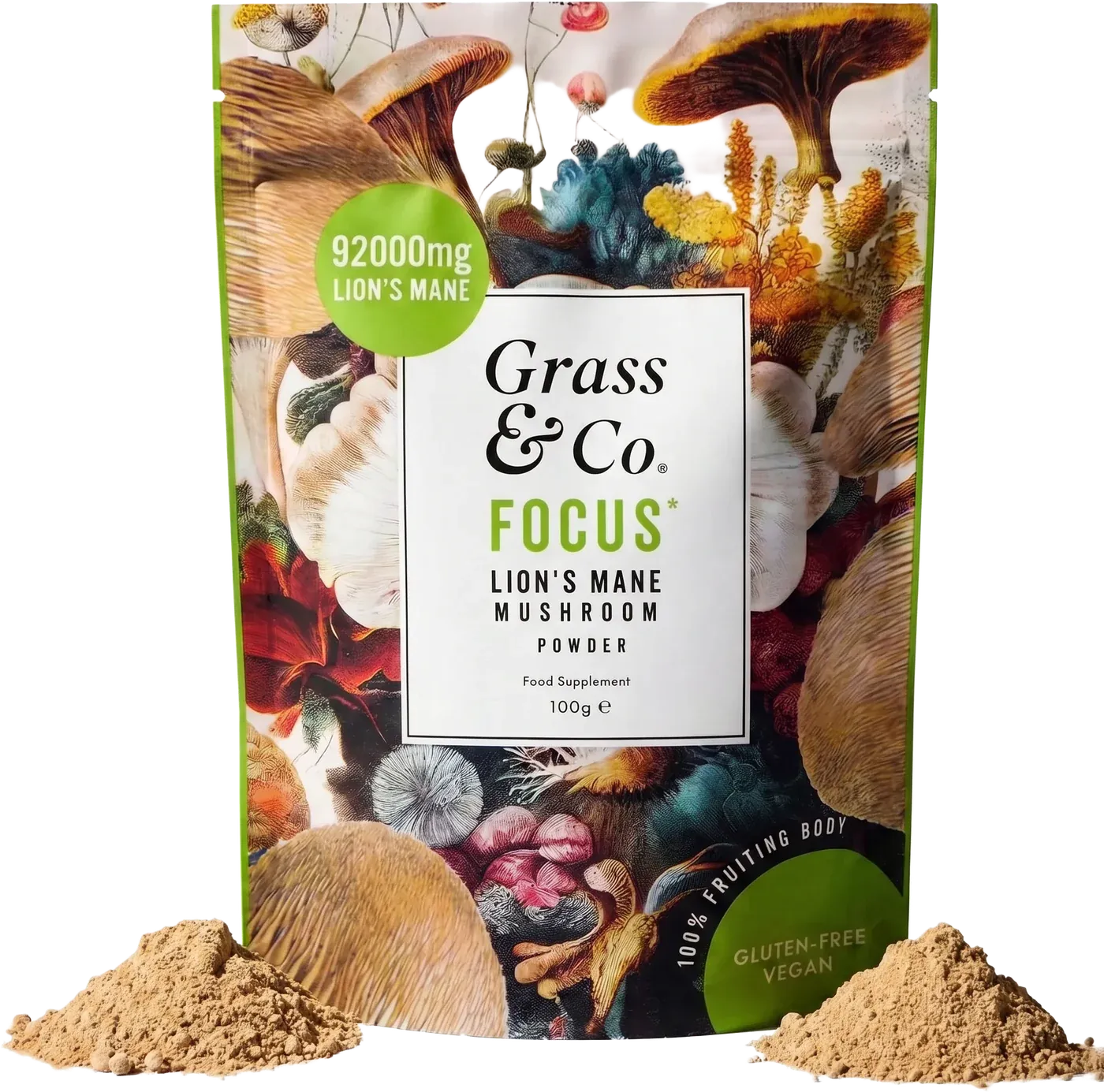
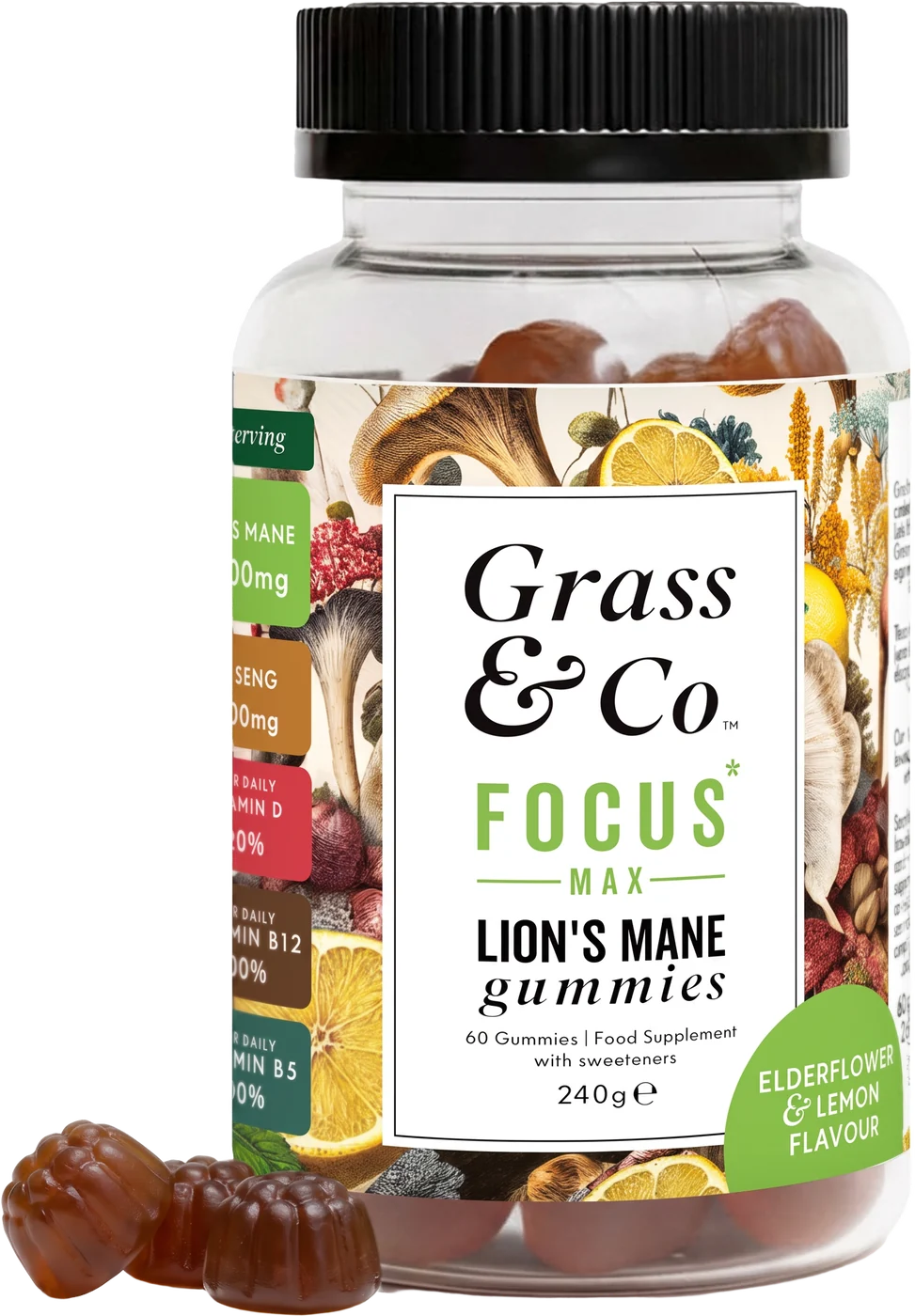
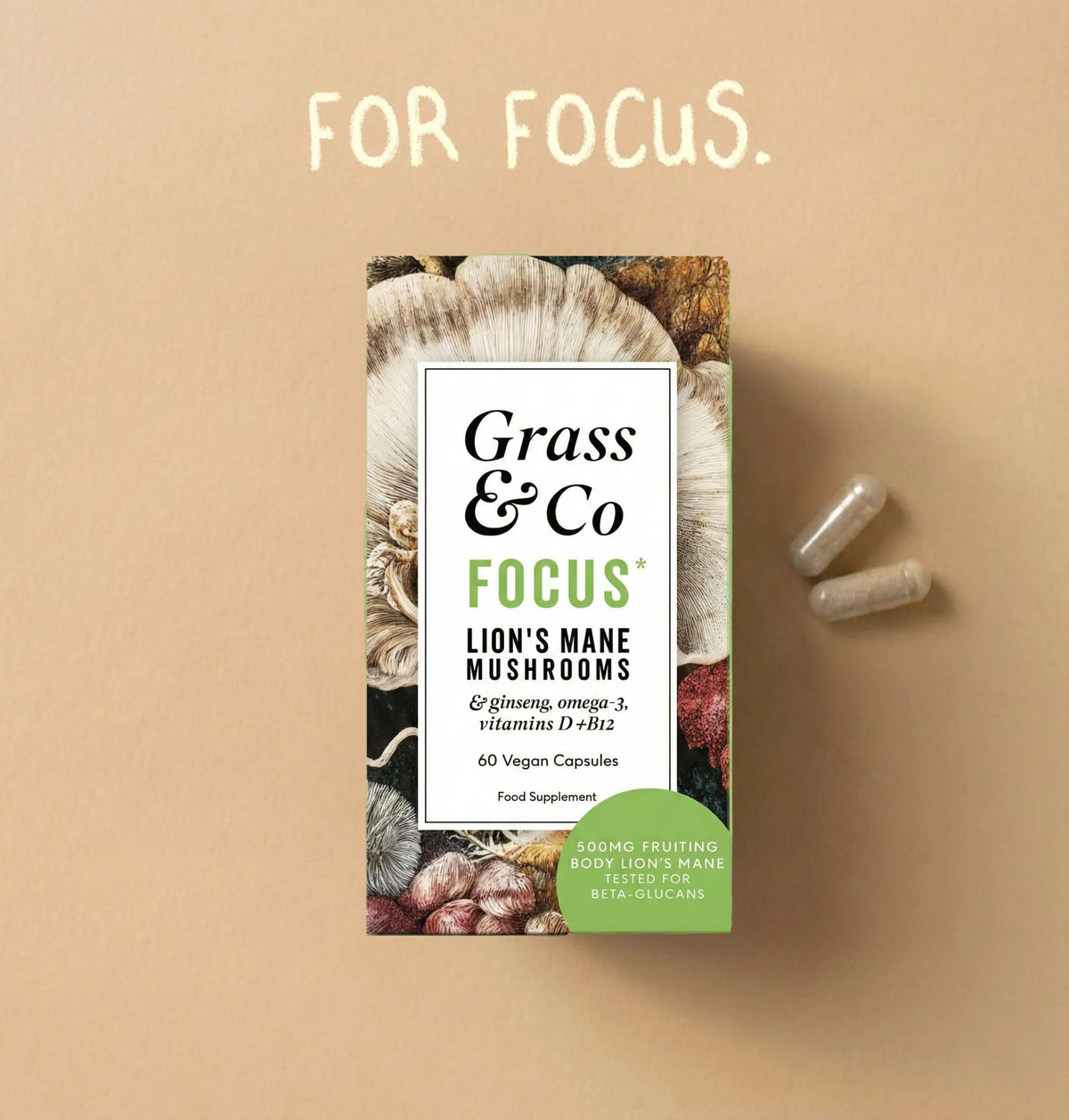
As capsules, as a powder stirred into a drink, as gummies, or in a ready-made drink. Our own FOCUS range comes in all four, built on the same Lion's Mane fruiting body: FOCUS capsules, FOCUS Lion's Mane powder, FOCUS MAX gummies and the Liquid FOCUS can. Whatever you choose, stick to the serving on the label.
Is Lion's Mane safe?
Lion's Mane is eaten as a food and is generally well tolerated, but anyone allergic to mushrooms should avoid it. Food supplements are not recommended if you are pregnant or breastfeeding, taking medication or have a health condition, unless your doctor agrees. Never use a supplement in place of a varied diet or medical treatment.
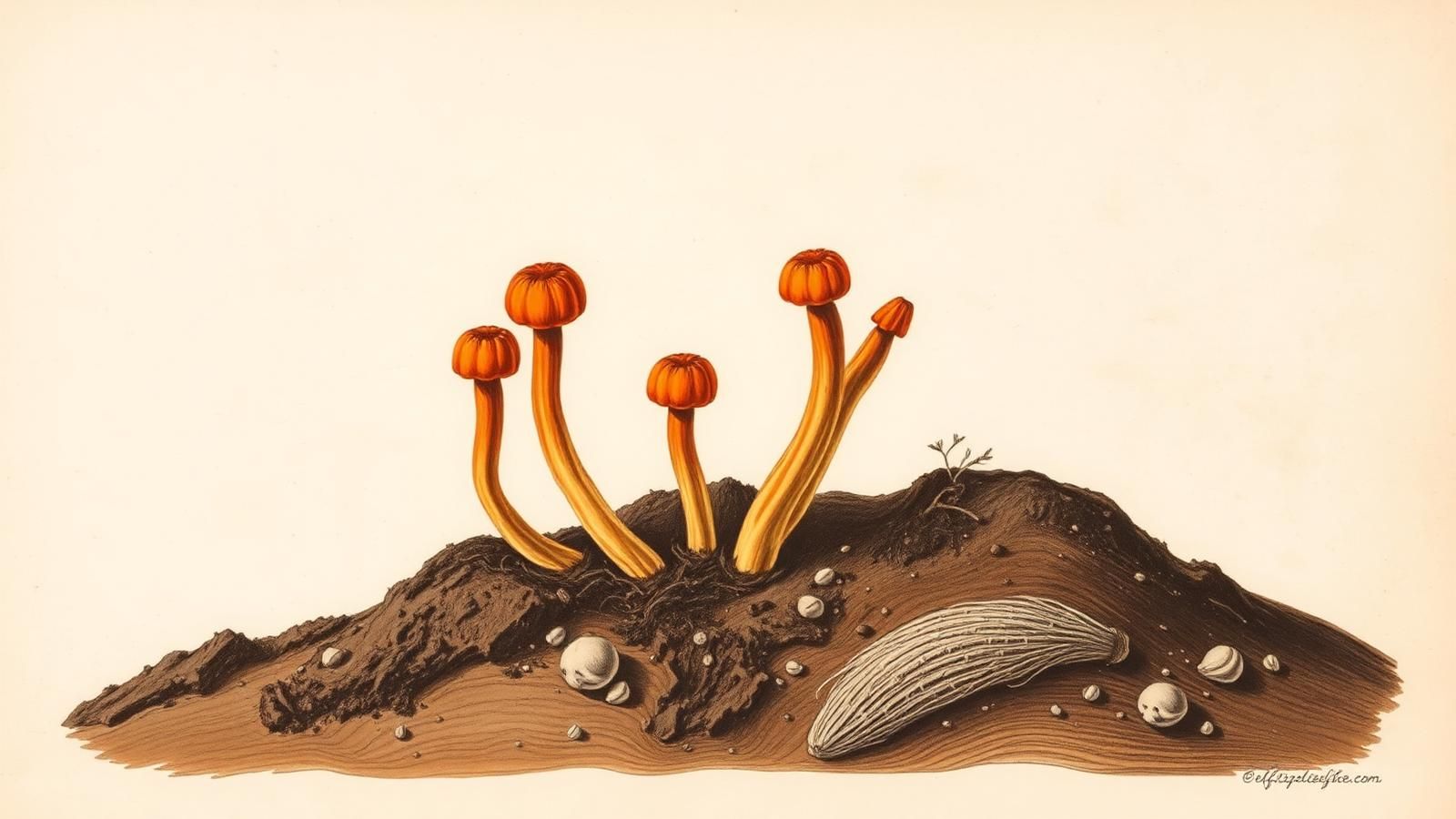
Want the botanical story? Read the Lion's Mane entry in our herbarium.
The morning routine
Two capsules, first thing, and on with the day.
Watch with sound on Instagram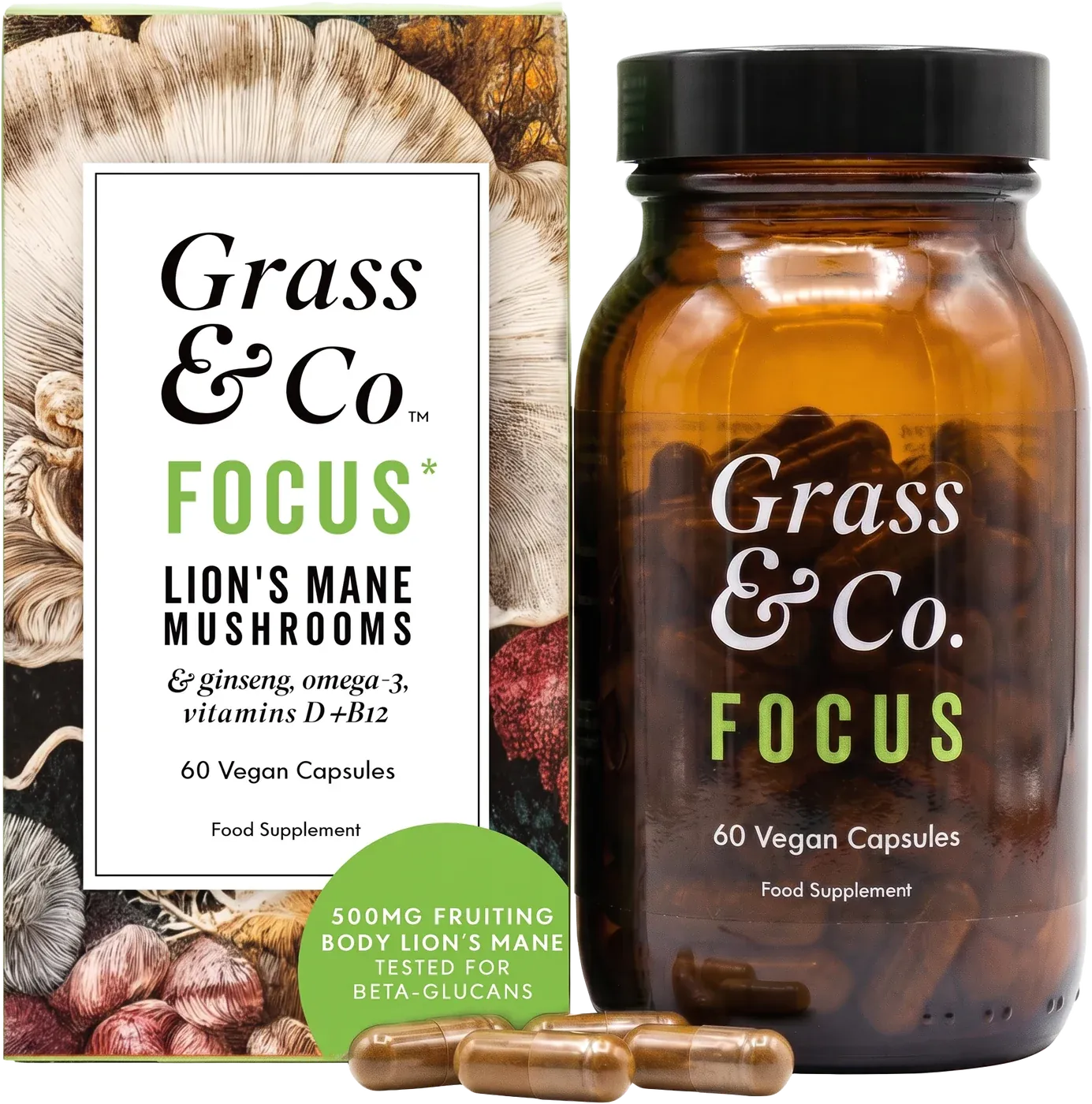 10 awards
 Focus
Capsules
FOCUS | Lion's Mane Mushroom Capsules
Clarity, naturally.
4.9 (74)
- Daily Nutrition
- Energy
- Mental Performance
Check Amazon for current price and availability.
 10 awardsFocus
Powders
FOCUS | Lion's Mane Mushroom Powder
Higher strength, more flexibility.
4.2 (9)
- Daily Nutrition
- Energy
- Mental Performance
Check Amazon for current price and availability.
 Focus Max
Gummies
FOCUS MAX | Lion's Mane Mushroom Gummies
High-strength Lion's Mane. No capsules. No water.
Check Amazon for current price and availability.

ONE GOOD THING,
EVERY SUNDAY MORNING.
A ritual, a recipe or something we've learned in the undergrowth, plus first dibs on new pours and stockist news. No noise, ever.